 Kyrgyzstan
On the Silk Road – Bishkek to Karakol via Burana Tower
Bishkek to Karakol via Burana Tower
The adventure officially began in a bit of a rush. We woke up ready to hit the road, but first came the all-important task of finding an open restaurant for breakfast in Bishkek — not as simple as it sounds early in the morning. Fueled at last, we headed to the Visit Alay office, where I met the rest of my trekking group.
The first feeling was a surprising one: familiarity. You know when you meet people for the first time but instantly feel like you’ve known them for ages? That was the vibe. Easy, warm, and filled with the kind of good energy you want at the start of a two-week adventure. After a short briefing, we piled into the car and set off for Karakol.
A Step Back in Time – Burana Tower
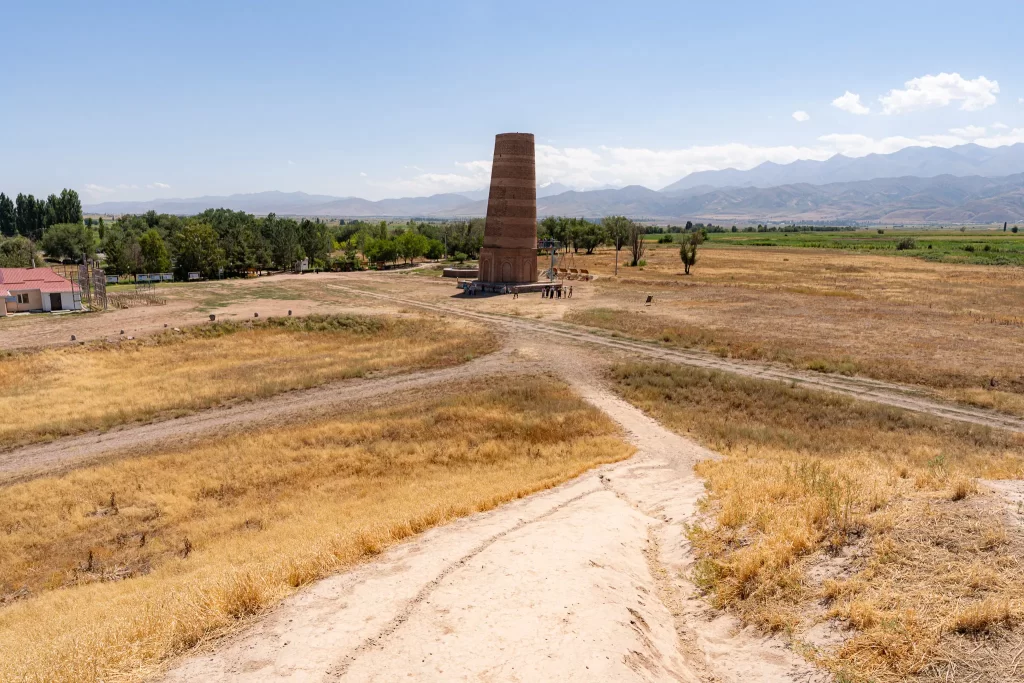
Halfway along the 7–8 hour drive, we stopped at one of the oldest and most fascinating treasures of Kyrgyzstan: the Burana Tower. Built in the 11th century, this brick minaret once guided Silk Road travelers through the region. It was part of Balasagyn town, a thriving settlement long since disappeared, leaving behind this single tower and its secrets.
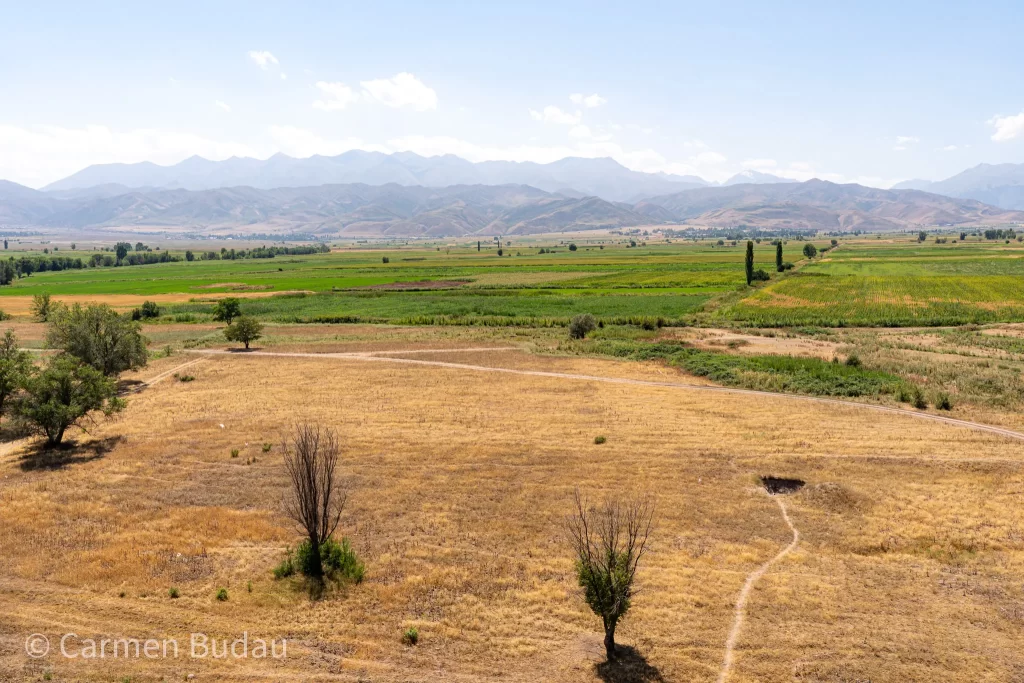
Naturally, I had to climb it (because who can resist a tower?). Let’s just say the architects of medieval Central Asia did not design staircases with comfort in mind: steep, narrow, and dark, like a vertical tunnel. My quads burned, but the view from the top — valleys and mountains stretching endlessly — made it worth every step.
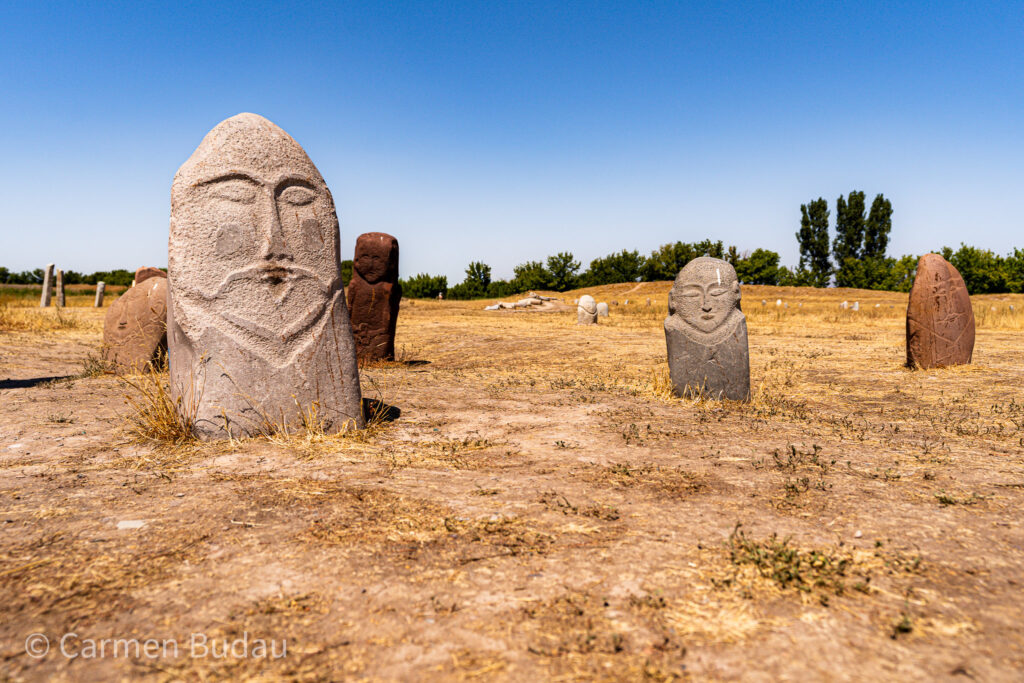
Nearby, a small museum held artifacts from excavations: coins, pottery, and remnants of lives once lived here. Outside, a field of balbals (stone grave markers) stood silently, like a stone army frozen in time. In Kyrgyzstan, history doesn’t just whisper — it lingers in the air.
The Road to Karakol
Back on the road, we stopped for lunch, and this was my first surprise of the day: the food. Simple but delicious, and in portions that could easily feed an army. By the time we rolled back into the car, our bellies were full and spirits even fuller.
The landscapes became wilder as we approached Issyk Kul Lake, the second-largest alpine lake in the world (after Titicaca). With its deep-blue waters stretching out like a shy inland sea, it shimmered under the sky — a giant mirror reflecting the surrounding peaks.
The closer we got to Karakol, the rougher the road became: asphalt giving way to bumps, dust, and stretches that tested both patience and suspension. Still, Kyrgyzstan has a way of making even a bumpy road feel like part of the story.
By the time we arrived in Karakol, I was both relieved and thrilled. Our guesthouse welcomed us warmly, and to our surprise, we were taken out for dinner at a local restaurant. And yes — once again — the food was abundant and delicious. If the trek didn’t keep me in shape, Kyrgyz hospitality surely planned to feed me into roundness.
A Warm Welcome
That first night ended not with exhaustion, but with gratitude. Kyrgyzstan had already shown me layers of its character: history carved in stone, lakes that look like oceans, roads that test your balance, and food that never stops coming.
And as I fell asleep in the comfort of a cozy guesthouse bed (with Wi-Fi, hot showers, and all the luxuries I knew would soon vanish), I felt both excitement and nerves. Tomorrow, the real trekking would begin — and I was ready to let the mountains take me deeper.
✨ Accommodation: Guesthouse
🍲 Meals included: Dinner (and plenty of surprises in between)
🚿 Facilities: Wi-Fi, electricity, hot shower, and western-style toilets (luxuries soon to be replaced by tents and outdoor toilets).